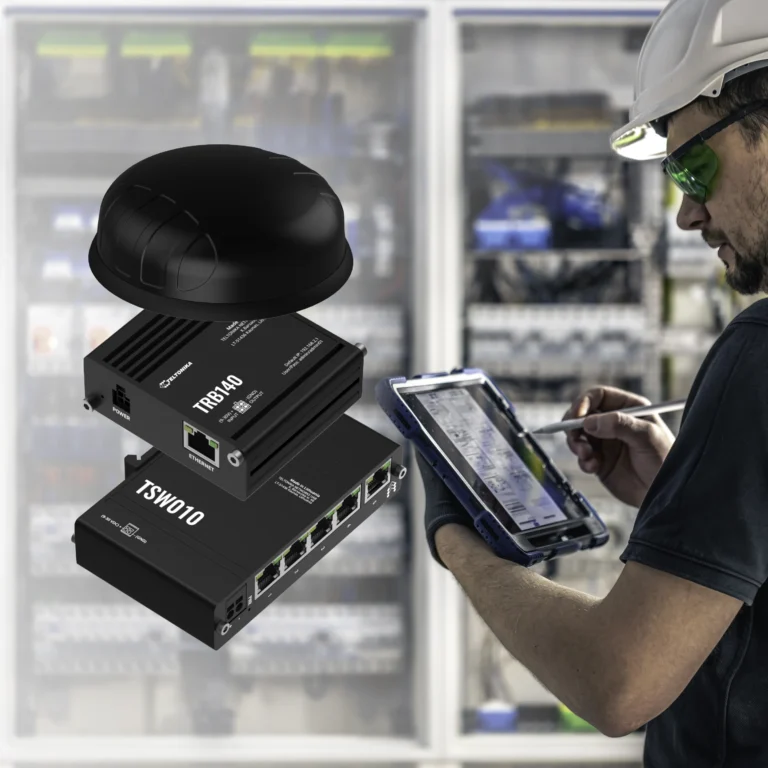
In recent decades, the proportion of renewable energy sources has been steadily increasing, with solar energy standing out among the various options. Not only globally but also in our country, solar power plants are becoming increasingly popular; every year, more small and large facilities are built. Solar farms encompass a complex infrastructure: they include inverters, control units, and energy storage systems, all monitored by operators 24 hours a day. In this article, we recommend IoT infrastructure components for the implementation of a smaller solar farm.
WHAT IS THE BLOG ABOUT?
- EASY IOT ACCESS FOR SOLAR FARM OPERATIONS
- IOT GATEWAY WITH LTE ANTENNA AND UNMANAGED SWITCH
- COST REDUCTION WITH INDUSTRIAL-GRADE AND ENERGY-EFFICIENT NETWORK DEVICES
A CHALLENGE: SIMPLE IOT ACCESS FOR OPERATING SOLAR FARMS
Since solar power plants are primarily built in remote locations, there is a need for scalable infrastructure that allows for IoT-based remote monitoring. In this case, monitoring is responsible not only for optimal operation but also provides predictive maintenance opportunities and alerts to potential risks – even before a likely malfunction occurs.
To establish the remote monitoring infrastructure, only a few industrial networking devices are needed: an IoT gateway and an unmanaged switch provide an excellent foundation for operators.
THE SOLUTION: IOT GATEWAY WITH LTE ANTENNA AND UNMANAGED SWITCH
The remote monitoring of the solar system is enabled by the Teltonika TRB140 IoT gateway with a Poynting OMNI-292 LTE antenna and a TSW210 unmanaged switch.
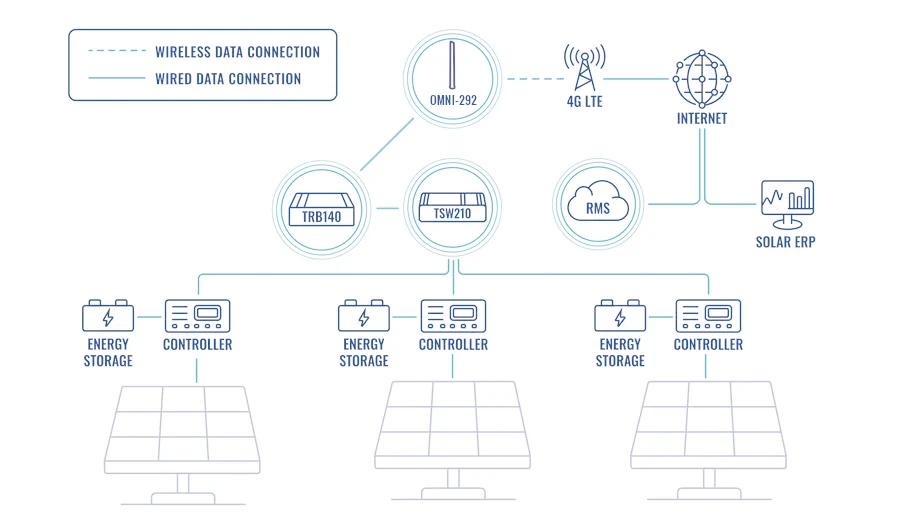
The controllers associated with the solar panel blocks connect to the TSW210 switch via RJ45 connections. For simple expansion, scalability can be achieved in the future by linking unmanaged switches to each other. This way, only a single switch needs to be connected to the TRB140 IoT gateway in the network. This setup reduces the number of mobile network gateways and antennas required, thereby lowering the overall cost of the IoT solution while maximizing the efficiency of the TRB140.
The TSW210 devices relay the LTE Cat 4 connection from the IoT gateway to the network of solar panels; the gateway collects data from the system and then transmits it to a remote ERP system designed for solar systems via the Modbus TCP protocol, where data aggregation and analysis take place. Access to the system also implies access to the data—this is how IoT-based remote monitoring and predictive maintenance are realized.
YOU MIGHT ALSO BE INTERESTED IN

IOT GATEWAY FOR REMOTE MONITORING OF SOLAR POWER PLANTS

HOW TO BUILD AN IOT INFRASTRUCTURE FOR AN EV CHARGING STATION?

MIMO-8: UNRIVALED PERFORMANCE FOR MODERN MOBILITY
CELLULAR REMOTE ACCESS PACKAGE FOR INDUSTRIAL CONTROLLERS

WHEN THE ROBOT ARM SAYS NO!
ANTENNA: TINY, CUPPING AND TRUCK DRIVERS LOVE IT?
COSTS: OPTIMAL TOOLS FOR LITTLE MONEY
Whether it’s the TRB140 or the TSW210, these compact, industrial-grade, energy-efficient network devices aim to help reduce the costs of industrial IoT solutions without compromising on quality or functionality. They also support key industrial VPN protocols and come equipped with numerous security features to ensure the protection of the connection under all circumstances.
Related Products
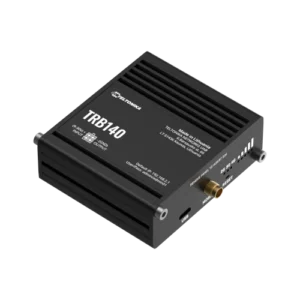
Teltonika TRB140 LTE gateway
The TRB140 is a compact industrial 4G (LTE) gateway with a Gigabit Ethernet port, Micro-USB, a high-performance CPU, and RutOS software for advanced networking solutions.
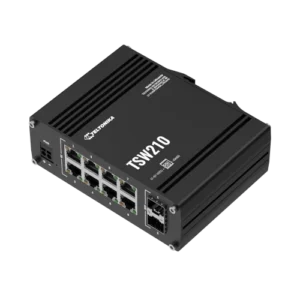
Teltonika TSW210 8-port switch
The TSW210 is an industrial-grade switch with eight Gigabit Ethernet and two SFP ports. The eight Ethernet ports allow for quick and easy connectivity of multiple devices.
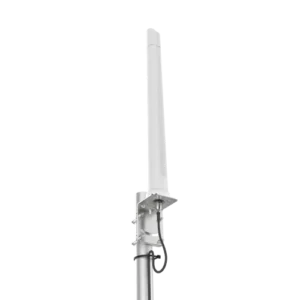
Poynting OMNI-292 antenna
The OMNI-292 is a high-gain omnidirectional antenna that covers all mobile frequency bands required for LTE (4G).
If you’re looking for an IoT connectivity solution that perfectly fits your infrastructure, look no further! Contact us and request a consultation!